Current Research
Research at the Shuai Zhang Group focuses on interfacial mechanics and its intersections with materials science, chemistry, and condensed matter physics. We seek to uncover the fundamental principles governing interfaces and use these insights to understand, design, and tune the mechanical, electrical, and physical properties of materials.
Tribology at Nanoscale
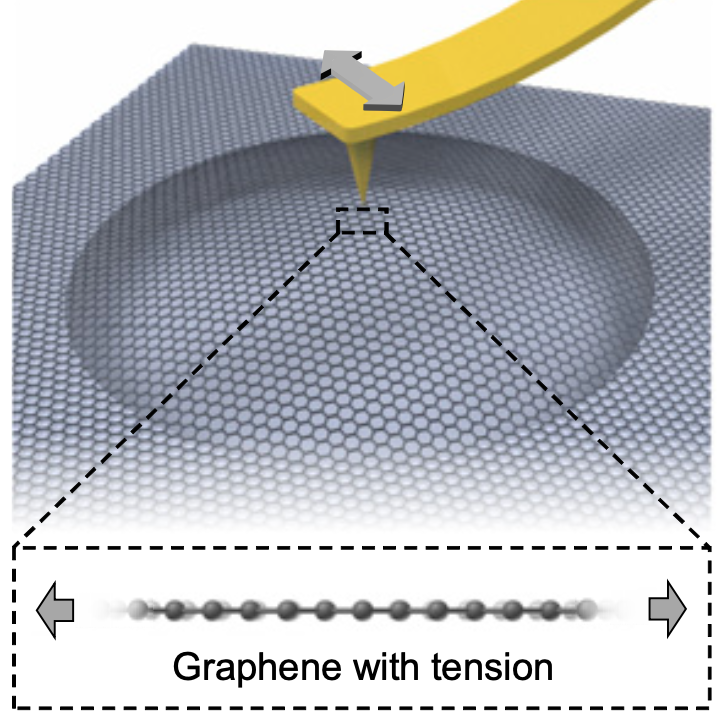
Controlling, and in many cases minimizing, friction is a goal that has long been pursued in history. From the classic Amontons–Coulomb law to the recent nanoscale experiments, the steady-state friction is found to be an inherent property of a sliding interface, which typically cannot be altered on demand. Two-dimensional materials, with atomically flat surfaces and highly tunable structures, offer a unique platform for understanding the microscopic origins of friction and dynamically regulating interfacial friction.
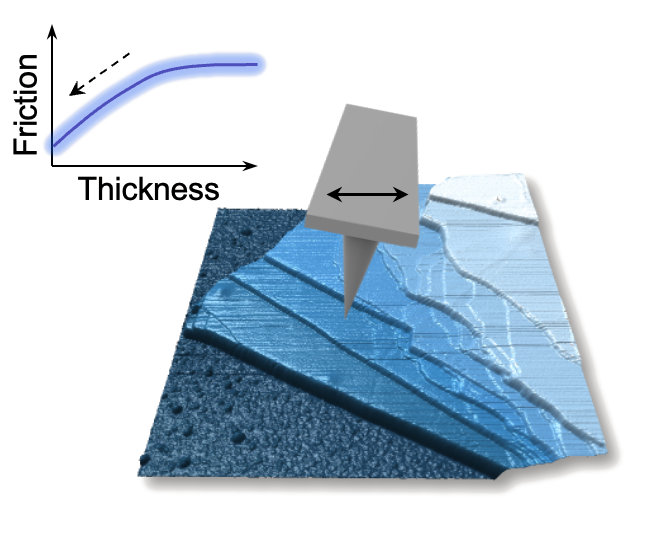
An unusual thickness-dependent friction was observed on ferroelectric CuInP2S6, opposite to the conventional trend. We attribute this to thickness-dependent work function and charge transfer. This work sheds light on the physical origins of friction for ferroelectric materials and suggests an effective strategy to actively regulate friction via work-function engineering.
See also: Chen, Z., et al., Unusual Thickness-Dependent Friction on CuInP2S6 Originating from Work-Function Regulation, Physical Review Letters (2025)
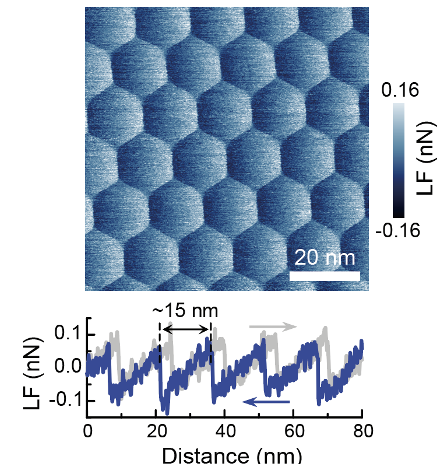
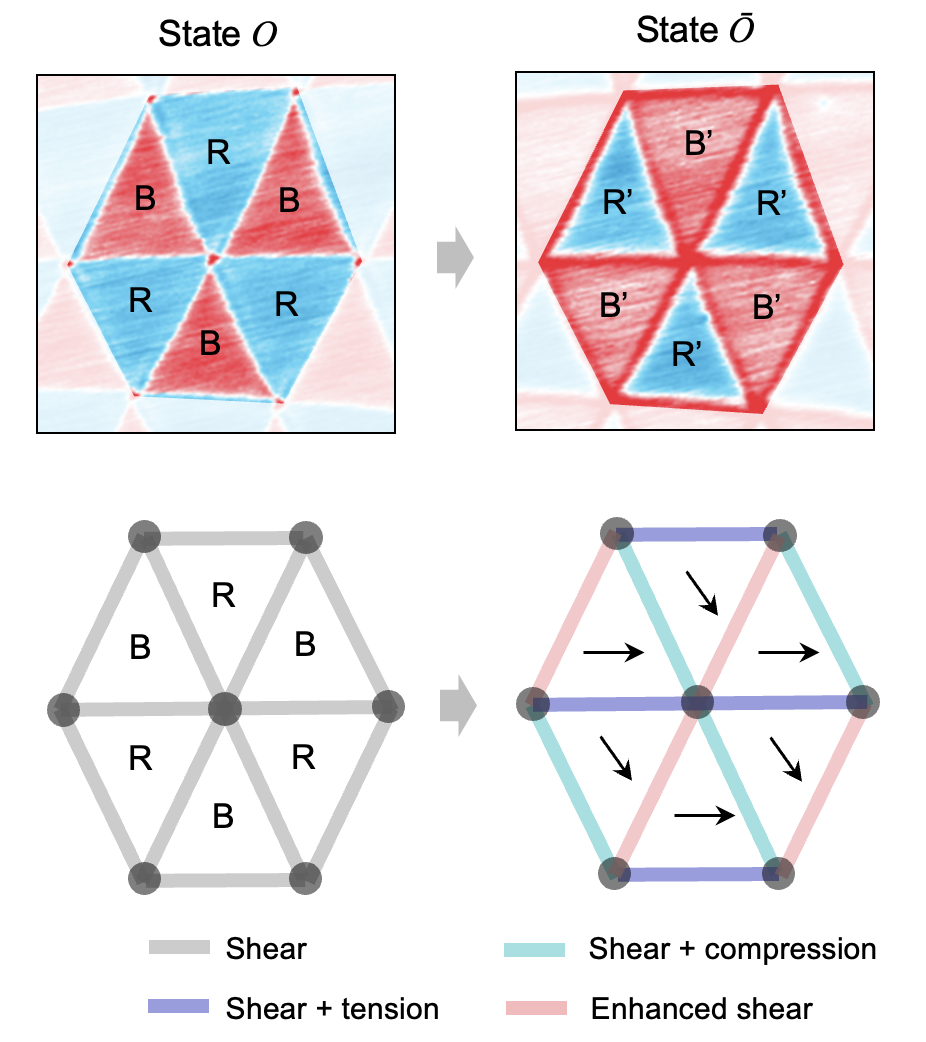
We observed unique dual-scale stick–slip on graphene/h-BN. We attribute the moiré-scale behavior to the accumulation and sudden release of strain in graphene. These results highlight the strong influence of interfacial states on the dynamics and energy dissipation of 2D structures.
See also: Zhang, S., et al., Dual-Scale Stick-Slip Friction on Graphene/h-BN Moiré Superlattice Structure, Physical Review Letters (2022)
In the news: Tsinghua News
Mechanics of Twisted Interfaces
Twisting van der Waals interfaces provides a powerful means to regulate interlayer coupling and engineer the physical properties of two-dimensional materials. We explore the rich mechanical phenomena emerging at these buried interfaces and harness them to understand and manipulate structural, electronic, and other emergent behaviors in twisted materials.
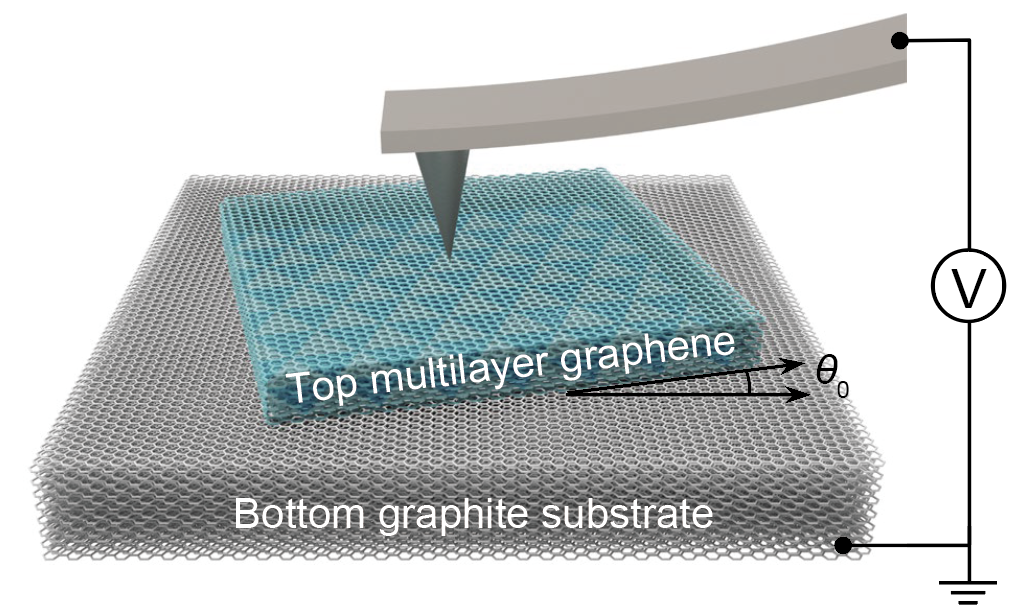
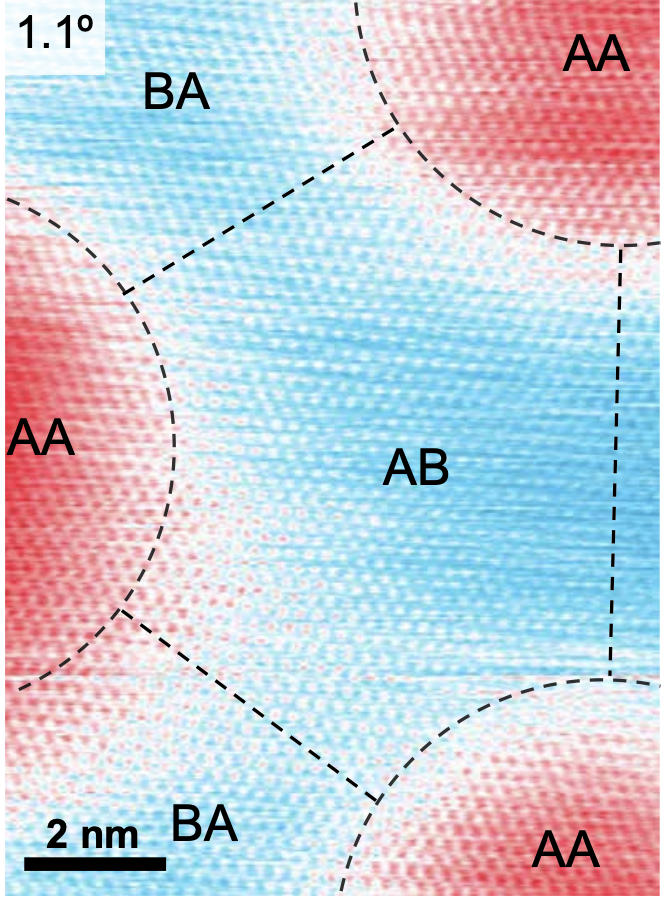
We report a nonmonotonic angle-dependent vertical conductivity across the interface of bilayer graphene with low twist angles. The abnormal behavior is attributed to the unusual reduction in average carrier density originating from local atomic reconstruction. These results highlight the key role of atomic reconstruction in tuning electronic transport in twisted van der Waals materials.
See also: Zhang, S., et al., Abnormal conductivity in low-angle twisted bilayer graphene, Science Advances (2020)
In the news: Phys.org News and Tsinghua News
Mechanochemistry
Mechanochemistry explores how mechanical forces drive chemical reactions and material transformations. We seek to uncover how stress and strain reshape reaction pathways and energy landscapes at interfaces, and harness these effects to create new materials and engineer novel devices beyond the reach of conventional thermal processes.
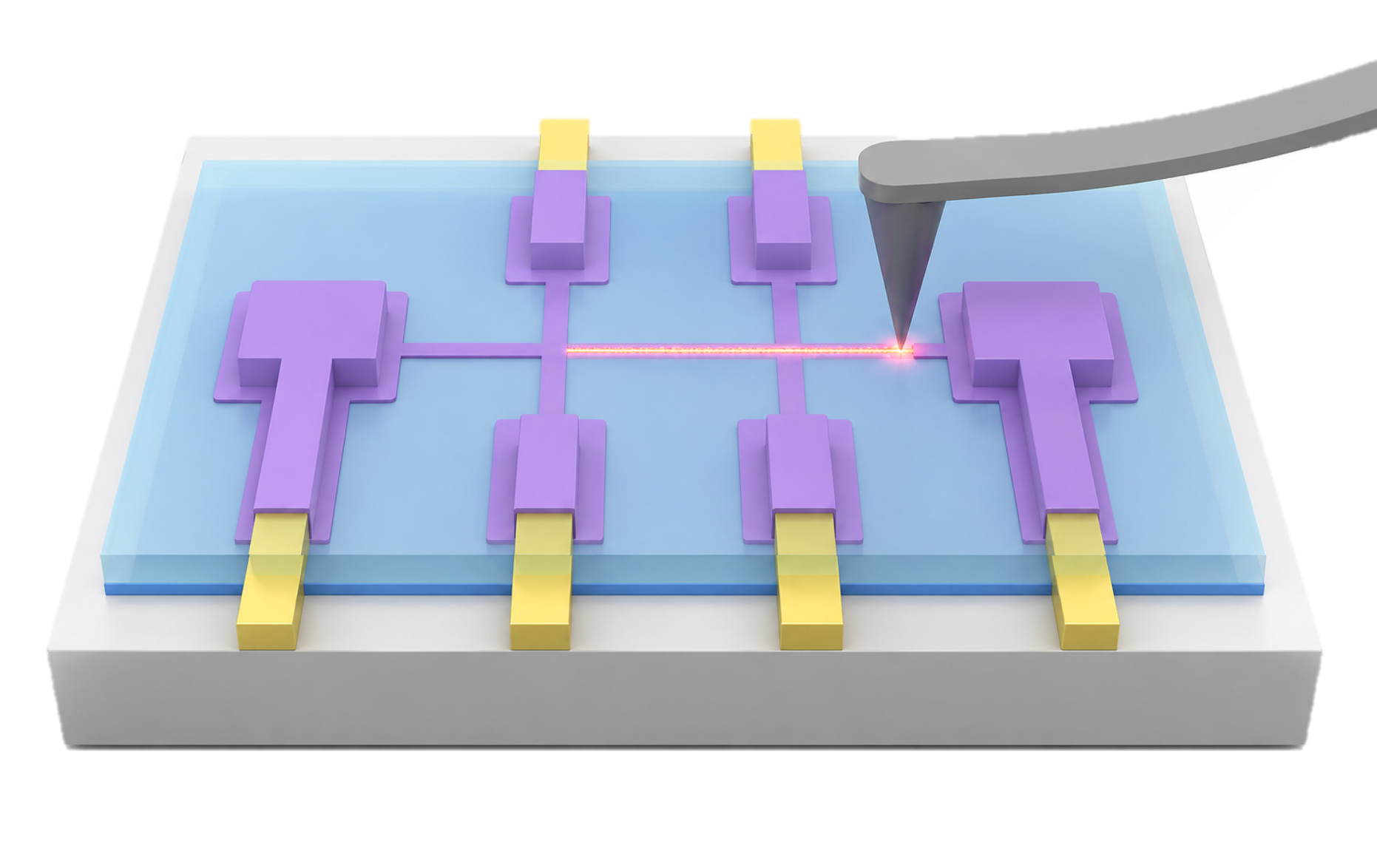
We demonstrate a force-enabled approach for synthesizing and patterning atomically thin superconducting materials with nanoscale precision. Local mechanical forces notably accelerate the Pd–MoTe2 reaction, enabling Pd7MoTe2 growth near room temperature with ~50 nm resolution.
See also: Zhang, S., et al., Mechanochemical Nano-Writing of an Atomically Thin Metal, Physical Review X (2026)
In the news: Penn Engineering News